Froza AC vs Qinux BreezaMax: Which Should You Buy?
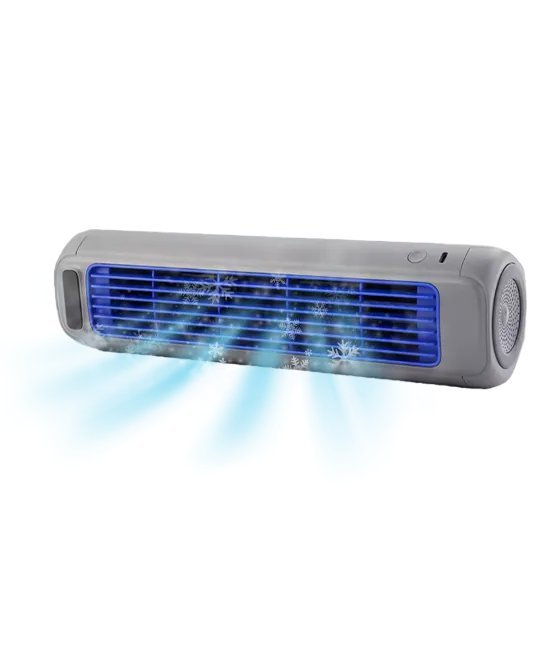
Froza AC

Qinux BreezaMax
Quick Verdict
These sit at opposite ends of our portable-cooling lineup on both price and documented cooling technology. Froza AC is the cheapest device we've reviewed here — a USB fan marketed as "evaporative cooling" with no reservoir described. Qinux BreezaMax uses a named "HydroChill" cartridge, a battery, and claims an air-circulation/dust-filtering extra, and is rated the same as Froza AC in our independent review (3.5/5 each). Go BreezaMax for a documented cooling mechanism and portability; go Froza AC only for the absolute lowest price.
Both Froza AC and Qinux BreezaMax are part of our independently reviewed portable-cooling lineup — this page pulls directly from those two reviews to put them side by side, rather than re-litigating either product's marketing copy from scratch.
Spec-by-Spec
| Spec | Froza AC | Qinux BreezaMax |
|---|---|---|
| Cooling technology | Directional fan, marketed "evaporative cooling" (no reservoir described) | "HydroChill" liquid-compression cartridge (manufacturer name) |
| Power source | Continuous USB, rated 5V/1A (~5W); no battery | Built-in rechargeable battery + USB-C input (5V–2A) |
| Placement | Desk, nightstand, or counter | Desktop or adhesive wall-mount |
| Speeds | 3 speeds (gentle breeze to "arctic blast") | 3 speed settings (gentle, natural, powerful) |
| Extra claimed function | None stated | Air-circulation / dust-filtering benefit (unverified) |
| Our rating | 3.5/5 | 3.5/5 |
Where Froza AC Wins
Froza AC is the cheapest, simplest option in either lineup — no battery or cartridge to manage at all, just a USB cable and a fan. Its rated power draw (5V/1A) is minimal if that's specifically your priority.
Where Qinux BreezaMax Wins
BreezaMax has a documented cooling cartridge mechanism ("HydroChill") versus Froza AC's undocumented "evaporative cooling" claim, is cordless once charged, has a bladeless design, claims an extra air-circulation/dust-filtering function, and is rated the same as Froza AC in our independent review (3.5/5 each).
Who Should Buy Which
Froza AC only makes sense if your bar is the absolute cheapest, simplest desk fan and you're comfortable treating its "evaporative cooling" language as marketing rather than a documented mechanism. For most people, BreezaMax's actual described cooling technology and cordless portability are worth the step up.
Froza AC — Pros
- Small, lightweight, and easy to place on a desk, nightstand, or counter
- Low rated power draw (5V/1A) compared to a full air conditioner
- No installation, app, or setup — plug in and go
Qinux BreezaMax — Pros
- Cordless once charged — no outlet needed at the point of use
- Bladeless design, arguably safer around kids or pets
- Explicit USB-C 5V–2A charging spec
Ready to check either one?
See current pricing and availability on the official pages.
Frequently Asked Questions
Does Froza AC really use evaporative cooling like BreezaMax's HydroChill cartridge?
Not documented the same way. BreezaMax names a specific cartridge technology; Froza AC's listing uses "evaporative cooling" language but describes no reservoir, cartridge, or refill process — treat that claim with more skepticism.
Which one is cordless?
Qinux BreezaMax, via its built-in rechargeable battery. Froza AC requires continuous USB power to run.
Are they rated the same?
Yes, both sit at 3.5/5 in our independent reviews — go BreezaMax for the documented cooling mechanism and portability, or Froza AC only for the lowest price.
This comparison is built from our own independent reviews of each product — see the full Froza AC review and Qinux BreezaMax review for the complete breakdown of each. GearGlobes may earn a commission from qualifying purchases; see our Affiliate Disclosure.

Ava covers home comfort and smart-home tech at GearGlobes. Her reviews separate what a product actually does from how it's marketed, flagging claims that can't be independently verified rather than repeating them as fact.