Happy Birdy Review: Is This Smart Bird Feeder Worth It?
 By Ava Sinclair · Updated July 26, 2026
How this review was made: based on the manufacturer's page, specifications, and publicly available owner feedback — we do not have physical possession of this unit. See how we test →
Visit Official Page →This offer is temporarily unavailable — showing our current alternative pick.Key Takeaways
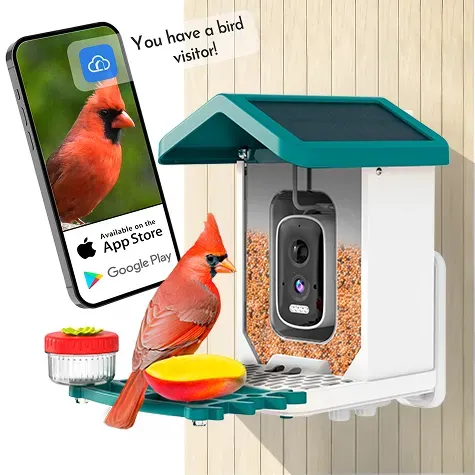
Smart bird feeders are one of the fastest-growing gadget categories because they turn a passive hobby into an always-on experience. Happy Birdy is one of the most complete options: a 2.5K camera feeder with AI species recognition, push notifications, night vision, and solar-assisted battery power.
- A camera-equipped bird feeder with AI species ID and push alerts that's become popular for turning backyard bird-watching into a hands-off, always-recording experience.
- The passive monitoring loop — motion triggers recording, AI names the species, your phone buzzes — means you never miss a visit.
- It needs Wi-Fi and the companion app to do anything smart; solar charging depends on your actual sun exposure at the mounting spot.
- A 90-day money-back return window is stated by the seller — plenty of time to see what visits your yard.
People buy smart bird feeders for one reason: the joy of knowing what visits your yard even when you're not watching. The appeal is real — getting a phone buzz when a cardinal shows up, scrolling through a gallery of visitors you'd never have seen otherwise, giving kids a low-effort nature activity that runs itself. Happy Birdy is built for exactly that experience: a motion sensor triggers a recording, an AI model names the species, and a push notification arrives on your phone before you've even walked over to look. It turns bird-watching from something you have to actively do into something that happens in the background and reports back to you.
What Is Happy Birdy, Mechanically?
The feeder pairs a 1.5L seed hopper with a 5MP camera module rated at 2.5K resolution, a 110° wide-angle PIR motion sensor, and a dual-light setup (full-color plus infrared) for footage after dark. Power comes from two included 18650 lithium batteries (4000mAh total) topped up by two included solar panels, so there's no cable to run to the mounting spot. Recordings sync over Wi-Fi to the companion app (branded "Tris Home" on the seller's own specs page) and to cloud storage, and a built-in speaker and mic support two-way audio — useful both for talking to birds and for scaring off squirrels raiding the seed.
Who Happy Birdy Is For
This is built for people who want ambient bird-watching without dedicating attention to it — parents looking for a low-effort nature activity with kids, birders who want a record of what passes through their yard, or anyone who likes the idea of a phone buzz when a cardinal shows up. It fits best mounted somewhere with a Wi-Fi signal and a clear view, not tucked in a dense hedge where the PIR sensor and camera can't get a clean read.
It's not a fit if you want a maintenance-free feeder you never think about — this one needs an app pairing step, periodic seed refills, and enough sun exposure for the solar panels to actually offset battery drain. Skip it if you don't want another connected device and app account in your life, or if your yard has no realistic Wi-Fi coverage at the mounting spot.
Happy Birdy
AI camera feeder with push alerts, night vision, and solar-assisted battery power.
Check the official page for current pricing and bundle options.
90-day money-back return window per the seller's policy
Visit Official Page →This offer is temporarily unavailable — showing our current alternative pick.Living With It
Setup is the usual smart-camera routine: mount the feeder using the included bracket and pole-mounting strap, pair it with the Wi-Fi app, and fill the 1.5L hopper by tilting back the lid. Day to day, the batteries and solar panels are meant to mean you're not pulling the unit down to recharge it on a schedule — but how little you touch it in practice will depend on how much direct sun the mounting spot actually gets, since two solar panels can only offset so much camera and Wi-Fi radio usage. Refilling seed and an occasional wipe-down of the camera lens is the extent of the routine maintenance.
What Works in Its Favor
- Sharp, always-ready camera. 2.5K resolution with AI species recognition and instant push notifications means you catch every visit without watching the window.
- Works after dark. Night vision and two-way audio let you monitor (and deter squirrels) around the clock.
- Solar-assisted power. Swappable 18650 batteries topped up by included solar panels — no power cable to run to the mounting spot.
- Easy to set up and fill. A 1.5L top-load hopper and bundled mounting bracket, pole strap, and hardware get it running quickly.
- Generous return window. A 90-day money-back guarantee gives you a full season to see what visits your yard.
Honest Limitations
- Requires Wi-Fi and the app. Without a network connection and the companion app, the camera and AI features don't function — it's just a feeder.
- Solar charging depends on placement. The panels need direct sun exposure at the mounting spot — a shaded location means more manual battery swaps.
- Spec inconsistencies on the sales page. The seller lists two different species-recognition counts (10,000+ vs. 1,000+) and two different waterproof ratings (IP65 vs. IP67) — judge the hardware by your own experience, not the copy.
- Another connected device to manage. App pairing, periodic seed refills, and occasional lens wipe-downs are part of the routine — it's not fully hands-off.
Key Specs
- Camera
- 5MP, 2.5K resolution, full-color + infrared night vision, 110° wide-angle PIR motion sensor
- Power
- 2x 18650 lithium batteries (4000mAh) + 2x included solar panels
- Connectivity
- Wi-Fi; companion app ("Tris Home") for iOS & Android; cloud storage
- Audio
- Built-in two-way audio (talk/listen)
- Food capacity
- 1.5L hopper
- In the box
- Feeder, solar panel, mounting bracket, pole-mounting strap, mounting bolts/screws, antenna, charging cable, user guide
Performance
The core mechanism — PIR motion detection triggering a camera recording and an app push — is standard, proven tech for this product category, and a 110° wide-angle sensor plus a 2.5K sensor should realistically catch most activity directly in front of the feeder. Night vision and two-way audio are common on connected cameras generally, so there's no reason to doubt they work as described. The genuinely untested variable is the AI species-identification model: how many species it can actually distinguish, and how it performs on partial or fast-moving visitors, isn't something we can verify from the sales page alone — and the page's own inconsistent species-count claims (10,000+ in two places, 1,000+ in a third) don't inspire confidence in exactly which number is real.
What the Sales Page Gets Right — and What It Doesn't
What checks out — the core hardware is real and well-understood: a PIR-triggered camera feeder with app push notifications, dual-battery-plus-solar power, two-way audio, and night vision are all established tech in this category. The 2.5K camera, 110-degree wide-angle sensor, and motion-triggered recording should realistically catch most activity in front of the feeder. The 90-day return window and bundle pricing are stated transparently.
Worth knowing — the sales page contradicts itself on the species-recognition count (10,000+ in two places, 1,000+ in a third) and the waterproof rating (IP65 in the hero and FAQ, IP67 in the specs table). The "As Seen On" press logos are self-reported rather than tied to real coverage we could find. None of this changes the camera — it works as a camera feeder — but rest your decision on the hardware specs and the return window.
Verdict
Happy Birdy is a strong pick for anyone who wants to know what visits their backyard without watching the window — the combination of motion-triggered recording, AI species alerts, and solar-assisted power covers the actual job well. Calibrate expectations around two things: solar charging depends on your mounting spot's sun exposure, and the inconsistent species count and waterproof rating on the sales page should be treated as approximate rather than precise. The 90-day return window gives you a full season to evaluate — mount it, watch what shows up, and decide while the window is open.
This review reflects our independent editorial opinion based on publicly available product information — see how we test and our Editorial Policy. GearGlobes may earn a commission from qualifying purchases; see our Affiliate Disclosure.
Frequently Asked Questions
How does Happy Birdy identify bird species?
An onboard AI model analyzes each visitor captured by the 2.5K camera and attempts to name the species, sending the result to your phone via push notification. Accuracy will vary by species and how clearly the bird is captured.
Does it need to be plugged in?
No. It runs on two swappable 18650 batteries (4000mAh) topped up by included solar panels. How often you need to swap batteries depends on sun exposure at your mounting spot.
Does it work at night?
Yes. A dual-light setup — full-color and infrared night vision — lets it keep capturing footage after dark.
What if birds don't come to my yard?
Give it time — birds need days to weeks to discover a new feeder. Place it in a visible, quiet spot with nearby perching options. The 90-day return window gives you plenty of time to evaluate.
Do I need Wi-Fi?
Yes. The camera, AI species recognition, push notifications, and cloud storage all require a Wi-Fi connection and the companion app. Without them, it functions only as a basic feeder.
Ready to try Happy Birdy?
See current pricing, bundle deals, and availability on the official page.
Read the full Happy Birdy Overview for specs, how it works, and where to buy — or browse more picks in Smart Bird Feeders.
Ava covers home comfort and smart-home tech at GearGlobes. Her reviews separate what a product actually does from how it's marketed, flagging claims that can't be independently verified rather than repeating them as fact.