Septifix Review: Do These Septic Tank Tablets Really Cut Pumping Costs?
 By Ava Sinclair · Updated August 31, 2026
Key Takeaways
A septic tank is one of those systems homeowners only think about when something goes wrong — smell, slow drains, a soggy patch over the drain field — and by then a repair or an unscheduled pump-out can run into the thousands. Septifix is a monthly tablet pitched as cheap insurance against that: oxygen and live bacteria flushed down the toilet to keep the tank's own digestion process running well. The underlying chemistry is real and used elsewhere in wastewater treatment; how the sales page backs up its specific numbers is where this review spends most of its time.
- A real, checkable mechanism. Oxygenation plus aerobic bacteria to break down solids and neutralize odor-causing compounds is standard wastewater-treatment chemistry, not a novel or unproven idea.
- A generous, plainly stated guarantee. 60 days, no questions asked, is a longer window than most product categories offer.
- Several unsourced numbers. A precise "21,374 septic tank owners," an unnamed university research partnership, and uncited independent lab testing all appear without any way to verify them.
Most homeowners on a septic system only learn how it actually works when something goes wrong with it — a smell that won't go away, water backing up, or a pumping bill that arrives sooner than expected. Underneath a healthy septic tank is a population of bacteria doing the real work: breaking down solid waste so it doesn't accumulate into sludge that has to be physically pumped out. Septifix is a tablet-form additive built around that same idea, sold through a ClickBank-hosted advertorial that leans heavily on avoided-pumping-cost math and a small library of customer stories. The category itself — bacterial and enzymatic septic treatments — is a real, if debated, corner of the home-maintenance market, and Septifix is one of many competing products in it.
What Is Septifix, Mechanically?
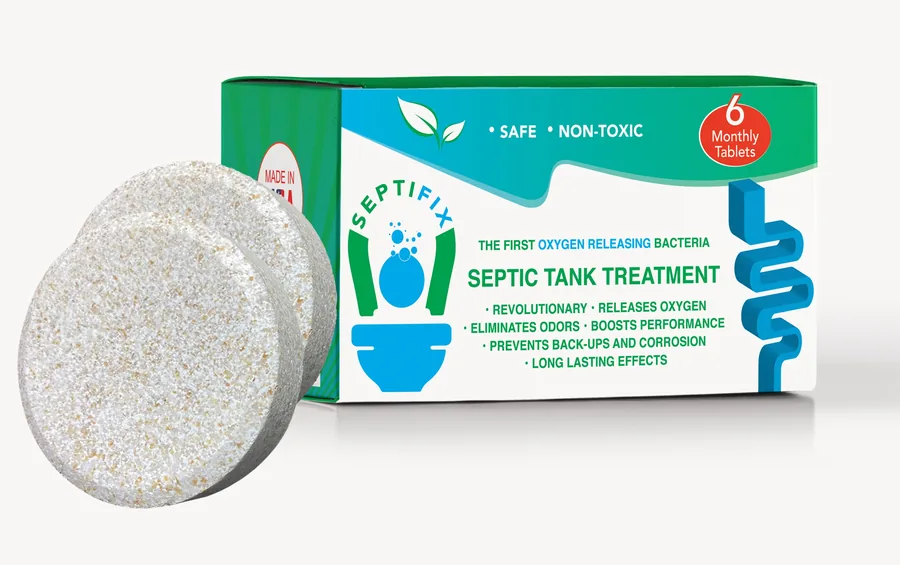
Each 55-gram Septifix tablet is solid and dissolves after being flushed down the toilet, releasing sodium carbonate and oxygen into the septic tank. The seller states each tablet contains 14 strains of aerobic bacteria at a concentration of over 10 billion bacteria per gram, and that the tablet releases up to 10 liters of oxygen as it dissolves. That oxygen is the mechanism behind the odor claim: hydrogen sulfide, the compound responsible for septic smell, reacts with released oxygen and is neutralized, which the seller says shows up as reduced odor within three to five days. The sodium carbonate component is described as a pH buffer, bringing the tank's water toward neutral, which is the condition aerobic bacteria need to survive and multiply — as opposed to the anaerobic bacteria that dominate an untreated septic tank and do comparatively little to break down solids. The live aerobic bacteria are described as feeding on the organic residue inside the tank — oils, grease, soaps, toilet paper — which is the part of the mechanism tied to the pumping-reduction claim.
Who It's For
This fits homeowners on a septic system, rather than municipal sewer, who are already noticing early warning signs — odor near the tank or drain field, slower-than-usual drainage, or a septic company flagging heavier-than-normal solids at the last pump-out. It's a weaker fit as a blanket "everyone on septic needs this monthly" purchase: a septic system that's draining fine, doesn't smell, and gets inspected on a normal schedule doesn't have an obvious problem for an additive to solve, and the case for routinely dosing a healthy system is the part of this product category that's genuinely debated (more on that below).
Septifix
Oxygen-releasing septic tank treatment tablets with 14 strains of aerobic bacteria — one tablet flushed monthly for maintenance.
✔ 60-day money-back guarantee, no questions asked, on every package size.
Visit Official Page → This offer is temporarily unavailable — showing our current alternative pick.Living With It
The intended routine is simple by design: for a system already showing problems, the instructions call for an initial dose of three tablets flushed down the toilet, then one tablet per month going forward for maintenance. There's no mixing, measuring, or equipment involved beyond a toilet — which is a genuine convenience compared to septic aerators, which the sales page correctly notes typically cost well over $10,000 to install plus ongoing electricity. Whether monthly dosing becomes a habit that's easy to keep up with, or one that's easy to forget, is a fair question the sales page doesn't really address — there's no reminder system or subscription structure described, just the standing recommendation to reorder before a package runs out.
What Works in Its Favor
- The core chemistry is legitimate. Aerobic bacterial digestion assisted by supplemental oxygen is an established wastewater-treatment approach, not a fabricated mechanism — full-scale aerobic treatment units for septic systems use the same underlying principle.
- Genuinely simple to use. No mixing, measuring, or hardware — flush a tablet down the toilet and the dosing is done.
- A long, plainly stated guarantee. 60 days with no conditions listed beyond dissatisfaction is more generous than most product categories offer.
- Made-in-USA manufacturing claim. Stated plainly on the packaging shown in the product photos, which at minimum is a checkable, falsifiable claim rather than vague sourcing language.
Honest Limitations
- Key statistics are uncited. "Over 21,374 septic tank owners" and "87% repeat buyers" are stated with unusual precision but no source, survey, or methodology behind either figure.
- The origin story can't be verified. A founder narrative involving "a prestigious university" and "a team of 14 scientists" over three years of research never names the university, the scientists, or a published study.
- Independent lab testing is referenced, not shown. The claim that unnamed "independent laboratories" found Septifix-treated water cleaner than municipal treatment systems has no named lab, no report, and no link.
- A real health-outbreak story is used without a source or a direct link to the product. The page cites a 2009 Hepatitis A outbreak tied to a failing septic system to underscore the danger of anaerobic bacteria, without citing where that account comes from or demonstrating that a product like this would have prevented it.
- Whether a healthy system needs this at all is a genuinely open question — some environmental and public-health guidance treats routine septic additives as unnecessary for a system that isn't showing problems, a caveat the sales page doesn't mention.
Key Specs
- Format
- Solid 55g tablet, flushed down the toilet
- Active ingredients
- 14 strains of aerobic bacteria (stated >10 billion bacteria per gram), sodium carbonate, oxygenating compound
- Claimed oxygen release
- Up to 10 liters per tablet (seller figure, not independently verified)
- Dosing
- 3 tablets initial dose for an already-struggling tank, then 1 tablet per month for maintenance
- Bacterial activity window
- Seller states colonies remain active for up to 90 days per dose
- Not disclosed
- Named research institution, named independent test labs, specific study or report backing the water-quality comparison claim
Performance
The mechanism Septifix describes — supplemental oxygen plus aerobic bacteria digesting solids faster than the anaerobic bacteria that otherwise dominate an untreated tank — is standard, well-documented wastewater-treatment chemistry, and nothing about the basic premise reads as implausible. Where the sales page overreaches is in the specificity of numbers it can't back up: an exact oxygen-release figure, a precise customer count, and a repeat-buyer percentage are all presented as settled facts with no visible source. In practice, that means a reasonable expectation is "a legitimate bacterial-and-oxygen additive, in the same category as other septic treatments," not the "#1 on the American market" framing the page opens with — and whether it measurably outperforms competing tablet or liquid treatments isn't something the public sales material lets you check.
What the Sales Page Gets Right — and What It Doesn't
Start with what holds up. The chemistry described — oxygen release, pH buffering via sodium carbonate, aerobic bacteria digesting organic solids — matches real wastewater-treatment science, and the dosing instructions (three tablets to start, one monthly after) are specific and consistent rather than vague. The 60-day guarantee is stated in plain, unconditional terms.
Where it's harder to take at face value: the founder origin story names no university, no scientist, and no publication behind "$1.5 million in research" and "a team of 14 scientists." The claim that independent labs found Septifix-treated water cleaner than municipal treatment systems names no lab and links to no report. A real 2009 Hepatitis A outbreak tied to a failing septic system is used to build urgency around anaerobic bacteria, without a cited source or evidence that this specific product would have prevented it. And the customer counts — 21,374 owners, 87% repeat buyers — carry a level of precision that would normally come with a methodology, which isn't provided here. None of this means the tablets don't do what they chemically should do; it means the page's specific credibility claims need to be taken as marketing, not as documented fact.
Verdict
Septifix is built on real chemistry — aerobic bacteria and supplemental oxygen are a legitimate way to help a struggling septic tank digest solids and reduce odor, and the dosing routine (three tablets to start, one monthly after) is about as low-effort as home maintenance gets. But the sales page surrounds that legitimate mechanism with claims it doesn't back up: an unnamed research university, uncited independent lab testing, and customer statistics stated with a precision no source supports. It's also worth knowing that dosing a septic system that isn't showing any problems is a genuinely debated practice, not something this page acknowledges. If your tank is already showing early warning signs — odor, slow drains, a septic company noting heavier solids — the 60-day guarantee makes trying it a low-risk way to find out whether it helps your specific system; we wouldn't treat the sales page's research and customer-count claims as verified facts going in.
This review reflects our independent editorial opinion based on publicly available product information — see how we test and our Editorial Policy. GearGlobes may earn a commission from qualifying purchases; see our Affiliate Disclosure.
Frequently Asked Questions
How long until Septifix actually eliminates the smell?
The seller says odor reduction starts within three to five days of flushing the first tablet, as the released oxygen reacts with the hydrogen sulfide compounds that cause septic smell. That's a specific, checkable timeframe rather than vague marketing language, though it's the seller's own claim and not independently tested.
Will Septifix let me stop pumping my septic tank entirely?
The seller says many customers reduce or eliminate pumping frequency, not that pumping becomes universally unnecessary. Septic professionals generally still recommend periodic tank inspection regardless of what additive is used, since sludge and scum layers can build up from sources a bacterial treatment doesn't touch (non-biodegradable solids, for instance). Treat any additive's pumping-reduction claim as a possible outcome, not a guarantee, and keep an eye on your tank's condition rather than skipping inspections outright.
Is a septic tank additive like Septifix actually necessary?
This is genuinely contested. A well-functioning septic system already hosts its own bacterial ecosystem, and some environmental and public-health agencies have cautioned that most commercial septic additives are unproven or unnecessary for a system that's working normally, and in rare cases can disrupt the tank's natural balance. Septifix's specific pitch is aimed at systems already showing odor, slow drainage, or heavy solids buildup rather than healthy systems — worth keeping in mind before assuming every septic tank needs a monthly tablet.
How many tablets should I start with?
The seller's instructions say to start with three tablets flushed down the toilet if the tank is already showing problems, then move to one tablet per month for maintenance. That's the seller's dosing guidance, not an independently verified protocol, so following the package instructions is more reliable than any of the anecdotal customer routines described on the sales page.
What does the 60-day guarantee actually cover?
The seller offers a 60-day money-back guarantee with no questions asked if you're unhappy with the results. The sales page doesn't spell out whether a refund goes back to your original payment method or as store credit, so it's worth confirming that detail directly with the seller before you buy if it matters to you.
Ready to try Septifix?
See current package options and availability on the official page.
Read the full Septifix Overview for specs, how it works, and where to buy — or browse more picks in Septic & Drain Care.
Ava covers home comfort and smart-home tech at GearGlobes. Her reviews separate what a product actually does from how it's marketed, flagging claims that can't be independently verified rather than repeating them as fact.