Matsato Chef Knife vs Matsato Osuren: Which Matsato Knife Should You Buy?
At a Glance
The Matsato Chef Knife and Matsato Osuren are both sold by UAB Domestica, use the same cryogenic "ice hardening" process on the blade, and carry an identical 60-day return window — on paper, they're closer to two finishes of the same product than two competing knives. The one documented difference that actually matters is the handle: beech wood with visible metal rivets on the Chef Knife, pakka-and-acacia wood on the Osuren, alongside a somewhat broader blade profile on the Osuren versus the Chef Knife's named santoku shape. Neither review turned up a reason to prefer one company's transparency or trustworthiness over the other's — this is a preference call, not a quality call.
Both the Matsato Chef Knife and Matsato Osuren are part of our independently reviewed kitchen-knife lineup — this page pulls directly from those two reviews to put them side by side, rather than re-litigating either sales page's marketing copy from scratch.
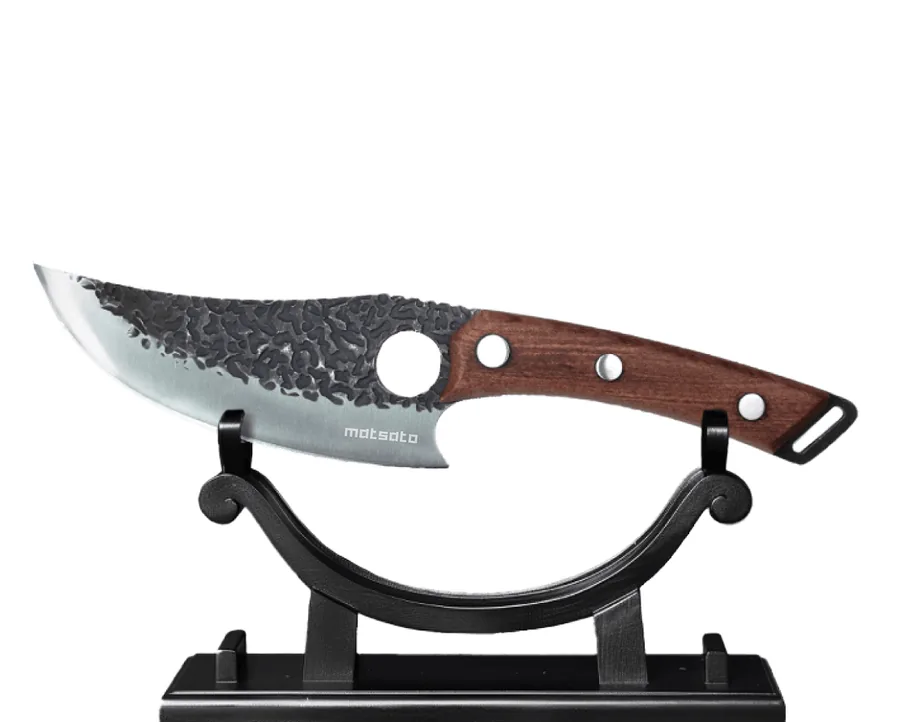
Matsato Chef Knife
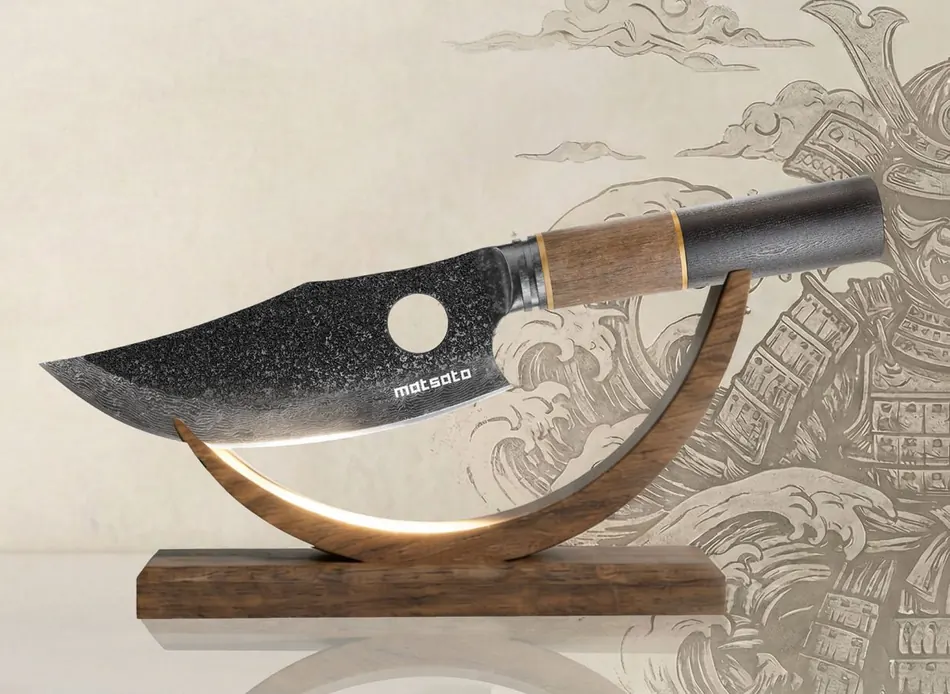
Matsato Osuren
Spec-by-Spec
| Spec | Matsato Chef Knife | Matsato Osuren |
|---|---|---|
| Blade style | Santoku-style, single-piece stainless steel with a laser-cut finger hole | Broad, gently curved single-piece stainless steel with a laser-cut finger hole |
| Blade treatment | Cryogenic ("ice") hardening, cooled below -100°C | Cryogenic ("ice") hardening, cooled below -100°C |
| Handle | Beech wood with visible metal rivets | Pakka and acacia wood |
| Design process | Seller states a 138-step manufacturing and testing process | Seller states a 138-step manufacturing and testing process |
| Company | UAB Domestica, registered in Lithuania | UAB Domestica, registered in Lithuania |
| Return policy | 60-day return window — refund, exchange, or store credit, RMA required | 60-day return window — refund, exchange, or store credit, RMA required |
Where the Matsato Chef Knife Wins
The Chef Knife's page is the more specific of the two on construction detail. Its blade shape has an actual name — santoku, a recognized profile familiar to anyone who's shopped for a chef knife before — where the Osuren's page only describes its blade as "broad" and "gently curved" without naming a style. The Chef Knife's spec sheet also explicitly calls out visible metal rivets securing the handle, a construction detail the Osuren's page doesn't mention at all. Neither difference is dramatic, but if you want the more precisely documented of the two knives going into a purchase, the Chef Knife's page gives you slightly more to go on.
Where the Matsato Osuren Wins
The Osuren's pakka-and-acacia handle is a genuinely different material choice, not a re-skinned photo of the same wood — its own page frames it as a warmer, more traditional-looking wood than the Chef Knife's beech, though how either holds up in a wet kitchen over time isn't something either sales page actually settles. Its blade is also described as broader than the Chef Knife's, which on a santoku-style profile generally means more belly for rocking-motion cuts, though — as with the Chef Knife — no blade length or weight is published to confirm exactly how that plays out in hand. If it's the handle material or the wider blade shape you're after, the Osuren is the only one of the two built that way.
Who Should Buy Which
This isn't really a "which is better" question — both knives come from the same company, use the same ice-hardening process, and carry the same return policy, and our independent reviews landed on the same score for each. Pick the Chef Knife if you want a named blade shape (santoku) and don't mind a beech handle with visible rivets; pick the Osuren if the pakka-and-acacia handle and a broader blade profile appeal to you more. Either way, the same gaps apply to both: no steel grade, hardness rating, blade length, or weight is published for either knife, so there's no way to benchmark cutting performance against a named competitor — or against each other — from the sales pages alone.
Matsato Chef Knife — Pros
- Named blade style (santoku) — a recognized, familiar shape
- Beech handle with visible metal rivets called out as a construction detail
- Same 60-day return window and transparent company disclosure as the Osuren
- Cryogenic ice-hardening treatment, a real and established technique
Matsato Osuren — Pros
- Distinct pakka-and-acacia handle, a genuine material difference
- Broader blade profile than the Chef Knife's santoku shape
- Same 60-day return window and transparent company disclosure as the Chef Knife
- Cryogenic ice-hardening treatment, a real and established technique
Where Both Fall Short
Read past the handle-and-blade-shape framing before buying either one. Neither sales page publishes a specific steel grade, a hardness (HRC) rating, a blade length, or a weight — "high-quality stainless steel" is as far as either listing goes, so there's no way to compare edge retention or durability against a named competitor on paper for either knife. Both pages also frame the design as inspired by Japanese bladesmithing tradition while only disclosing that the knife is "manufactured in Asia," without naming a country, and both carry a permanent-feeling "last chance" discount countdown regardless of when you actually visit. Neither knife has been hands-on tested by our team; both verdicts are editorial opinions based on publicly available product information.
Our Verdict
The Matsato Chef Knife and Matsato Osuren are close to the same knife wearing two different handles and blade shapes — same company, same ice-hardening process, same 60-day return window, and the same undisclosed steel grade and blade dimensions holding both back from a stronger recommendation. Choose the Chef Knife if you want a named santoku profile and a beech handle with visible rivets; choose the Osuren if the pakka-and-acacia handle and a broader blade shape suit you better. Whichever you pick, the 60-day return window makes either a reasonably low-risk way to find out if the grip and edge suit your kitchen.
Ready to check either one?
See current bundle options and availability on the official pages.
Frequently Asked Questions
What's actually different between the Matsato Chef Knife and the Matsato Osuren?
Both come from the same company, UAB Domestica, use the same cryogenic "ice hardening" process, and carry the same 60-day return window. The two documented differences are the handle — beech wood with visible metal rivets on the Chef Knife versus pakka-and-acacia wood on the Osuren — and the blade profile, described as santoku-style on the Chef Knife and a broader, more gently curved shape on the Osuren. Neither sales page publishes a steel grade, hardness rating, blade length, or weight for either knife, so there's no way to compare cutting performance between them on paper.
Is one of these knives better made than the other?
Not based on what either sales page discloses. Both use the same cryogenic hardening treatment, the same laser-cut finger-hole grip design, and come from the same registered company with the same return policy — our independent reviews scored both at the same internal rating. The choice comes down to which handle material and blade shape you'd prefer, not which one is the more legitimate product.
Which handle holds up better, beech or pakka-and-acacia?
Neither sales page settles this. The Osuren's page frames pakka-and-acacia as a warmer, more traditional-looking wood in photos, but how it holds up in a wet kitchen over time isn't something either listing actually documents. The Chef Knife's beech handle is the only one of the two that explicitly mentions visible metal rivets as a construction detail.
Do they have the same return policy?
Yes. Both come with a 60-day return window from delivery for a refund, exchange, or store credit, covering damage, defects, wrong items, or a plain change of mind on an unused knife — both require contacting support for an RMA number before shipping anything back.
This comparison is built from our own independent reviews of each product — see the full Matsato Chef Knife review and Matsato Osuren review for the complete breakdown of each. This reflects our independent editorial opinion based on publicly available product information — see how we test and our Editorial Policy. GearGlobes may earn a commission from qualifying purchases; see our Affiliate Disclosure.

Ava covers home comfort and smart-home tech at GearGlobes. Her reviews separate what a product actually does from how it's marketed, flagging claims that can't be independently verified rather than repeating them as fact.