Matsato Chef Knife Review: Is the Ice-Hardened Blade Worth It?
 By Ava Sinclair · Updated August 31, 2026
Key Takeaways
A dull kitchen knife is arguably more dangerous than a sharp one — it slips instead of cutting cleanly — which is a big part of why single-blade "hero knife" brands built around one exceptionally sharp all-purpose blade have become a recurring category online. The Matsato Chef Knife is one of those: a santoku-style blade with a laser-cut finger hole and a cryogenic hardening process, sold direct-to-consumer by a registered Lithuanian retailer. The core techniques it leans on are real; what's less clear is how they translate into numbers you could compare against a named-steel competitor.
- Ice hardening is a legitimate technique. Cryogenically treating steel to increase martensite content is an established, real metallurgical process used across the knife industry, not a marketing invention.
- A real, registered company stands behind it. UAB Domestica lists a Lithuanian company number and VAT ID, plus support lines for the US, UK, and Germany — more corporate transparency than most funnels in this space show.
- Key specs aren't published. No steel grade, blade length, or weight appears anywhere on the sales pages — "high-quality stainless steel" is as specific as it gets.
Single-blade "hero knife" brands — one exceptionally sharp, ergonomically designed all-purpose knife instead of a full block set — have become a recurring category of direct-to-consumer kitchen gadget over the past few years. The pitch is consistent across most of them: a distinctive blade shape, a comfort-focused handle, and some version of advanced heat or cold treatment to justify the edge-retention claims. The Matsato Chef Knife fits squarely into that category, sold through a company called UAB Domestica, a Lithuania-registered direct retailer that also lists customer support numbers for the US, UK, and Germany. It's worth knowing going in that the product page shares its underlying template and even some image-hosting paths with other similarly styled knife brands sold through the same funnel platform — common in this space, and not evidence of anything wrong on its own, but a sign this is one of several similar products built on shared infrastructure rather than a one-off boutique release.
What Is the Matsato Chef Knife, Mechanically?
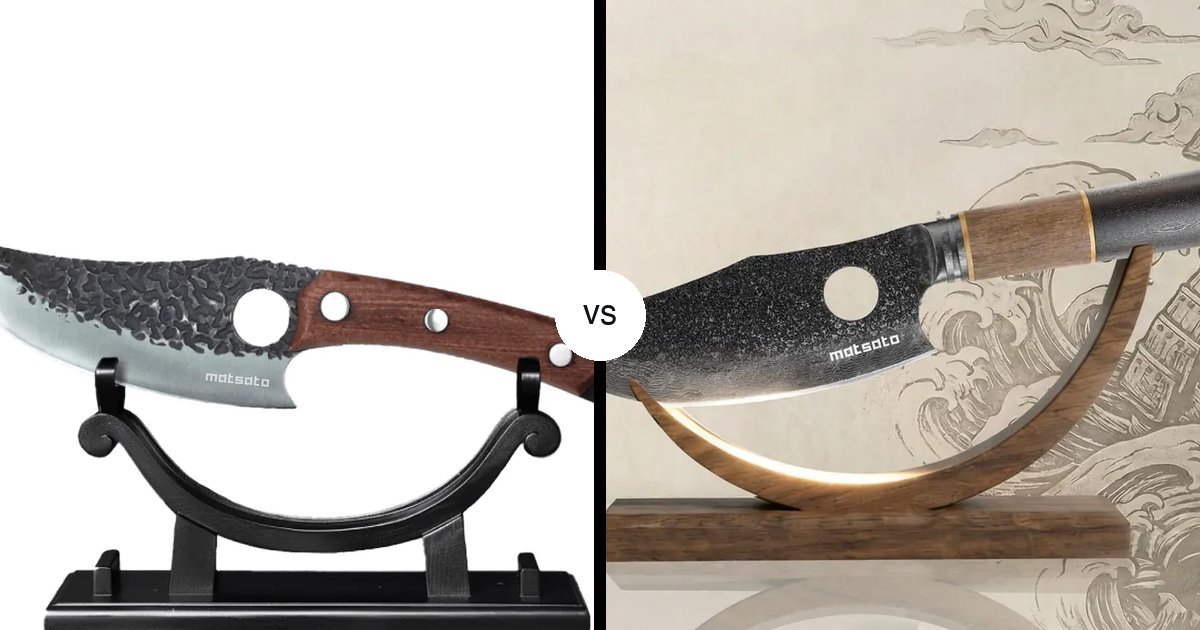
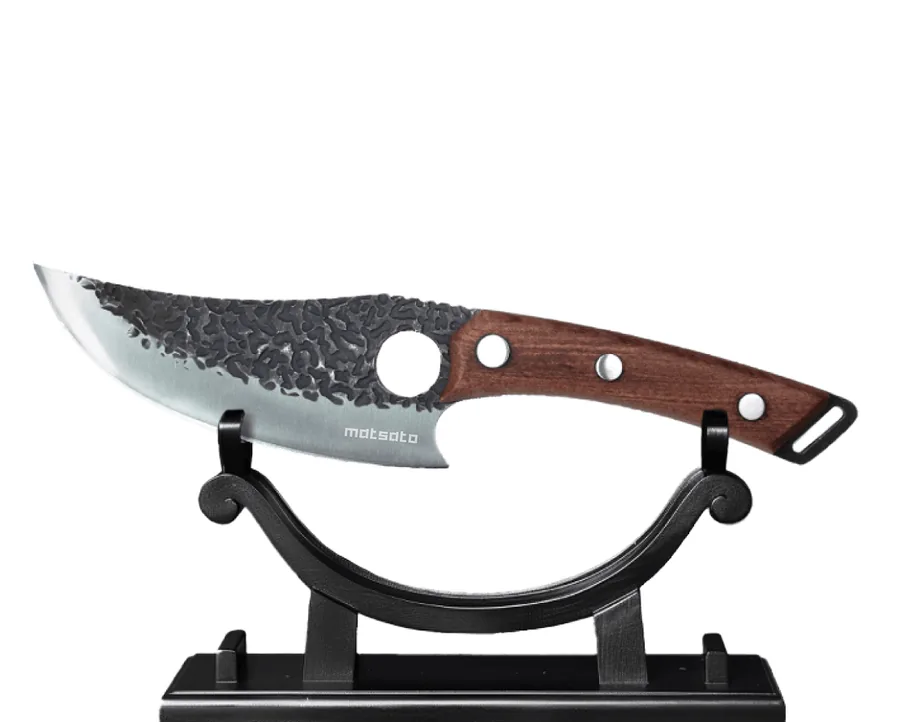
The blade is a santoku-style shape — a broad, slightly curved profile common in Japanese-influenced kitchen knives — made from stainless steel the seller describes only as "high-quality," with no named grade or published hardness rating. A laser-cut hole sits between the blade and the beech wood handle, sized for an index finger, which is meant to add control and reduce grip fatigue during longer cutting sessions; this is a real, established ergonomic design used by several similarly built knives, not unique to this one. The handle itself uses beech wood — described as dense with a distinctive dark grain — secured with visible rivets. The seller states the blade is treated by cooling it below -100°C to convert more of its internal structure into martensite, a harder crystalline form of steel, which the page frames as improving wear resistance, edge stability, and how long the blade holds its precision between sharpenings. That cryogenic treatment process is real and used across the wider knife industry; it's not something invented for this product.
Who It's For
This fits home cooks who want one capable all-purpose knife rather than a full block set, and who are drawn to the finger-hole grip style — it's a genuine design preference some cooks like and others find unnecessary, so it's worth knowing that going in rather than assuming it suits everyone. It's a weaker fit if you specifically want to compare steel hardness or edge-retention numbers against named competitors before buying, since this page simply doesn't publish the figures (grade, HRC rating, blade length) that comparison would require.
Matsato Chef Knife
Santoku-style chef knife with a laser-cut finger hole, ice-hardened stainless steel blade, and beech wood handle.
✔ 60-day return window — refund, exchange, or store credit, RMA required before shipping back.
Visit Official Page → This offer is temporarily unavailable — showing our current alternative pick.Living With It
Day to day, a santoku-style blade like this is built to handle the bulk of everyday prep — slicing, dicing, mincing — in place of reaching for several different knives. The finger-hole grip is the feature that most changes how it feels to use compared to a conventional handle: it's meant to lock your index finger in a consistent position near the bolster, which some cooks find genuinely improves control on repetitive cuts, while others find any molded or cut-out grip point restrictive over a long prep session. Because the seller doesn't publish a blade length or weight, it's hard to say from the page alone exactly how it'll balance in hand — that's the kind of detail this category of knife is usually easiest to judge in person rather than from photos.
What Works in Its Favor
- Ice hardening is real metallurgy, not marketing fiction. Cryogenic treatment to increase martensite content and improve wear resistance is an established, legitimate technique used across the knife industry.
- A genuinely transparent company behind it. UAB Domestica publishes a Lithuanian company registration number and VAT ID, plus support contact numbers for three countries — more verifiable corporate detail than most funnels in this product category disclose.
- A real, well-established ergonomic feature. The finger-hole grip design is a legitimate, if polarizing, control-focused choice used by more than one brand in this knife category.
- A workable 60-day return window. Covers damage, defects, wrong items, and plain change of mind on an unused knife, with a clear RMA-first process.
Honest Limitations
- No steel grade or hardness rating is published. "High-quality stainless steel" is the extent of the material disclosure — there's no way to compare it on paper against a knife that lists something like AUS-8 or a specific HRC number.
- No blade length or weight is listed anywhere. Basic physical specs that most knife brands publish as a matter of course are simply absent from the sales pages.
- The Japanese-heritage framing is vague on origin. The design is described as inspired by traditional Japanese bladesmithing, but the About page only says the knife is "manufactured in Asia" without naming a country — worth knowing if where it's actually forged matters to you.
- Manufactured urgency is present. A "last chance, last day" countdown framing sits on the page regardless of when you actually visit it — standard scarcity messaging, not a real deadline.
Key Specs
- Blade style
- Santoku-style, single-piece stainless steel with a laser-cut finger hole
- Blade treatment
- Cryogenic ("ice") hardening, cooled below -100°C to increase martensite content
- Handle
- Beech wood with visible metal rivets
- Design process
- Seller states a 138-step manufacturing and testing process
- Company
- UAB Domestica, registered in Lithuania (company and VAT numbers published)
- Not disclosed
- Specific steel grade, hardness (HRC) rating, blade length, weight, country of manufacture
Performance
The underlying techniques the Matsato Chef Knife leans on — cryogenic hardening for edge retention, a finger-hole grip for control, a santoku-influenced profile for general-purpose cutting — are all real, established approaches used elsewhere in the knife industry, not invented claims unique to this product. What the sales material doesn't let you verify is how well this specific knife executes them: without a named steel grade, a hardness rating, or a blade length, there's no way to line it up against a competitor's spec sheet before buying. In practice, that means a fair expectation is "a competently built hero-knife in a well-established category," backed by a real, transparent company — not a knife you can benchmark against named rivals purely from what's published.
What the Sales Page Gets Right — and What It Doesn't
Start with what holds up. The cryogenic hardening description is specific and accurate to how the process actually works, the finger-hole grip is a real and established design rather than an invented gimmick, and the company disclosure — a named Lithuanian entity with a company number, VAT ID, and multi-country support lines — is more transparent than most pages in this category. The 60-day return policy is stated in clear, specific terms.
Where it's thinner: the "high-quality stainless steel" description never gets more specific, so there's no grade or hardness figure to check against a competing knife. The Japanese-tradition framing implies a heritage the "manufactured in Asia" disclosure doesn't actually confirm or deny — it's vague rather than false. And the "last chance, last day" urgency banner is standard scarcity messaging that doesn't reflect a real, one-time deadline. None of this means the knife performs poorly; it means the page's marketing framing outruns its own disclosed specifics in a few places.
Verdict
The Matsato Chef Knife is built on legitimate ground: cryogenic hardening is real metallurgy, the finger-hole grip is an established ergonomic choice rather than an invented gimmick, and the company behind it — a registered Lithuanian retailer with published contact details across three countries — is more transparent than most funnels selling this style of product. What it doesn't give you is the specific numbers (steel grade, hardness rating, blade length) that would let you directly compare it against a named competitor before buying, and its Japanese-heritage framing sits a little uneasily next to the vague "manufactured in Asia" disclosure. If you're after a well-built, ergonomically designed all-purpose kitchen knife and you're comfortable buying on described technique rather than a full spec sheet, the 60-day return window makes it a reasonably low-risk way to find out if the grip and edge suit your kitchen.
This review reflects our independent editorial opinion based on publicly available product information — see how we test and our Editorial Policy. GearGlobes may earn a commission from qualifying purchases; see our Affiliate Disclosure.
Frequently Asked Questions
What kind of steel is the Matsato Chef Knife blade made of?
The seller describes it only as "high-quality stainless steel" — no specific steel grade (like AUS-8 or German 1.4116) is published anywhere on the sales or product pages. That makes it hard to compare its hardness or edge retention against named-steel competitors on paper; the ice-hardening treatment is the seller's stated answer to durability instead.
What does "ice hardening" actually do to the blade?
Ice hardening (cryogenic treatment) is a real, established metallurgical process: cooling steel to very low temperatures converts more of its structure into martensite, a harder crystalline form, which can improve wear resistance and help a blade hold its edge longer between sharpenings. It's a legitimate technique used across the knife industry, not unique or invented for this product — the seller states a treatment temperature below -100°C, which is consistent with how the process is typically done.
Where is the Matsato Chef Knife actually made?
The seller's About page says the knife is "manufactured in Asia," without naming a country, and the design is described as inspired by traditional Japanese bladesmithing. The company itself, UAB Domestica, is registered in Lithuania (VAT number listed on the site). None of that means the knife isn't well made, but the specific manufacturing location behind the Japanese-heritage framing isn't disclosed.
What's covered under the return policy?
The seller offers a 60-day return window from delivery for a refund, exchange, or store credit — covering damaged, defective, or wrong items, or simply a change of mind on an unused, unopened product. You start the process by contacting support for an RMA number before shipping anything back, and shipping costs on a change-of-mind return aren't refundable.
Is the finger-hole design in the blade safe to use?
A laser-cut hole between the blade and bolster for the index finger is a real, established design used by several similarly styled chef knives, meant to add control and reduce hand fatigue during extended cutting. It's a legitimate ergonomic feature, though how comfortable it feels will depend on your hand size and grip style — something no sales page can fully substitute for trying the knife yourself.
Ready to try the Matsato Chef Knife?
See current bundle options and availability on the official page.
Read the full Matsato Chef Knife Overview for specs, how it works, and where to buy — or browse more picks in Kitchen Knives.
Ava covers home comfort and smart-home tech at GearGlobes. Her reviews separate what a product actually does from how it's marketed, flagging claims that can't be independently verified rather than repeating them as fact.