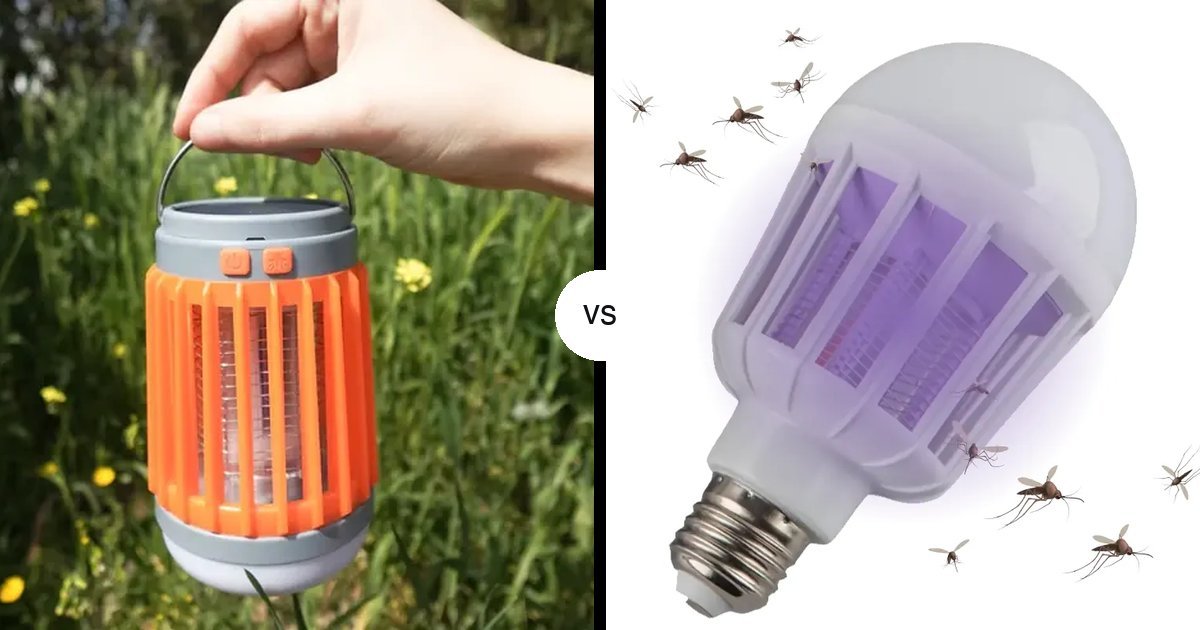
Mosqinux Killamp Review: Does a UV Zapper Bulb Actually Stop Mosquitoes?
 By Elliot Vance · Updated August 27, 2026
Key Takeaways
Nobody wants to spray themselves with repellent before bed, and that discomfort is exactly the gap the plug-in mosquito market has grown into. Mosqinux Killamp is one of the simplest-looking answers to it: a light bulb you screw into a fitting you already own. The hardware is real and the appeal is obvious — but the mechanism it actually uses and the mechanism it is sold on are two different things, and that gap is what this review works through.
- It is a zapper, not a repellent. The page markets it as an “anti-mosquito” and “repellent” bulb, but the seller's own FAQ describes attracting insects with light and electrocuting them on a grid — the opposite strategy, and the one the product photos actually show.
- Light is a weak lure for mosquitoes specifically. Mosquitoes track carbon dioxide, warmth and skin odour rather than light, which is why UV traps reliably catch moths and midges in quantity and mosquitoes far less so. This unit carries no CO₂ or octenol lure.
- The efficiency claim cites the wrong end of the scale. “Energy-efficient (G class)” is self-defeating — G is the lowest rung of the EU A-to-G energy label, not a mark of efficiency.
- Genuinely non-chemical, and genuinely simple. No aerosols, no creams, no refills, and a standard E27 base — those parts of the pitch are true and are the product's real merit.
Mosquito season pushes an enormous amount of hardware onto the market every year, and most of it competes on convenience rather than on evidence. Sprays work but feel unpleasant; nets work but are awkward indoors; plug-in vaporisers work but consume refills and put insecticide into the air of a closed bedroom. Against that backdrop, a bulb that screws into an existing fitting and claims to handle the problem passively is a genuinely attractive proposition — no consumables, no chemistry, nothing to remember. Mosqinux Killamp is sold on exactly that promise through a Widitrade-hosted advertorial, and the hardware behind it is a real and recognisable category of device. The question worth answering is not whether the bulb exists or works as an appliance, but whether the specific job it is named for is the job it actually does.
What Is Mosqinux Killamp, Mechanically?
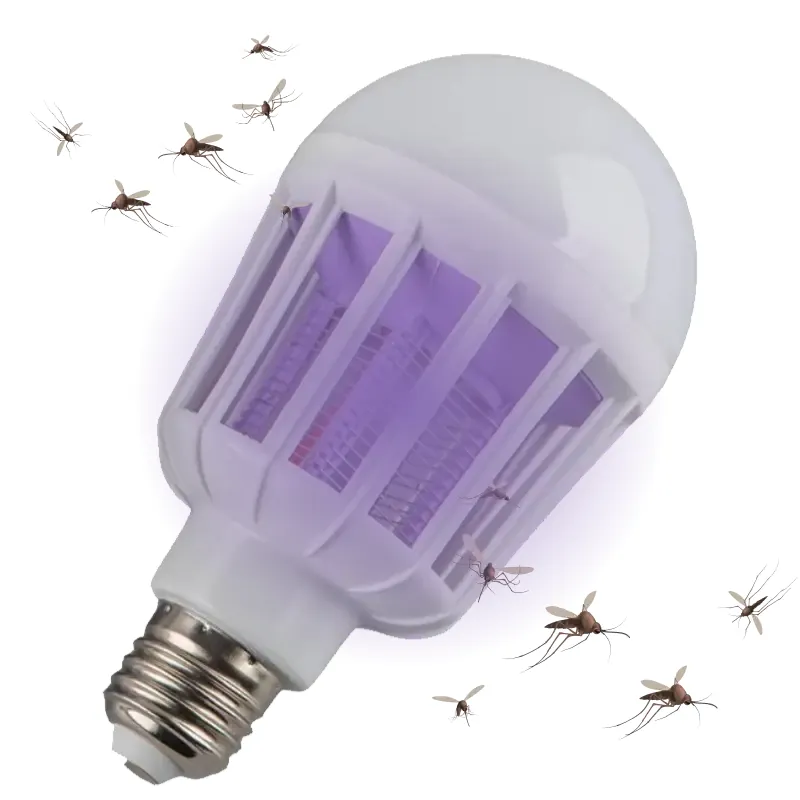
Strip away the copy and the device is straightforward. It is an E27 screw-base bulb with two light sources in one housing: a conventional white LED array in the upper dome for ordinary room lighting, and an ultraviolet element sitting inside a cage of vertical slots lower down. Behind those slots is a metal grid held at high voltage. Insects drawn toward the UV element pass between the slots, bridge the grid, and complete the circuit. That is the entire operating principle, and it is the same one used by the wall-mounted bug zappers that have existed for decades — the only real novelty here is the packaging, which folds the zapper into a bulb form factor so it can borrow a light fitting instead of needing its own mount.
This matters because it settles the contradiction at the centre of the sales page. A repellent works by making an area unattractive to insects. A zapper works by making it more attractive and then killing what arrives. The page uses the language of the first while describing and depicting the second. Whatever else follows, a buyer should understand they are installing a lure.
Who Mosqinux Killamp Is For
The honest fit is someone who wants a low-effort, chemical-free way to cut down general flying-insect traffic in a porch, garage, gazebo, shed or utility room — spaces where a bit of extra light is welcome and where moths, midges and gnats are the main nuisance. For that job the design is reasonable, the running cost is low, and the absence of aerosols is a real advantage in an enclosed space or around children and pets.
The weaker fit is the buyer the page is actually addressing: someone being bitten in their bedroom who wants that to stop. For that specific problem, the evidence base behind light-trap technology is not encouraging, and installing a device whose stated mechanism is to draw insects toward the room is a strategy worth thinking twice about.
Mosqinux Killamp
E27 LED bulb combining white room lighting with a UV lamp and an electrified insect grid, for indoor and covered outdoor fittings.
✔ A 30-day guarantee badge is shown on the offer page — the terms themselves aren't published there, so confirm the refund and return-shipping specifics at checkout.
Visit Official Page → This offer is temporarily unavailable — showing our current alternative pick.Living With It
Installation is as simple as advertised: unscrew the old bulb, screw this one in, done. The seller's own photographs show a second option that the copy barely mentions — a screw-base-to-wall-socket adapter with an integrated switch, which turns the bulb into a plug-in unit at outlet height rather than something running from a ceiling fitting. That is arguably the more sensible way to run it, since a zapper works best positioned away from where people sit rather than directly overhead. Worth noting that the adapter in those photos is a European type; anyone ordering from elsewhere should confirm which plug standard actually ships.
The operating trade-off is the part the page never addresses. The advertised “24-hour protection” only holds if the bulb is powered continuously, which sits directly against the “saves money on your electricity bill” pillar of the same pitch — and running a UV lure overnight in the room you sleep in is the opposite of what pest-control guidance generally recommends for trap placement. A grid that is quietly catching insects also tends not to be quiet; the audible snap of a discharge is the normal signature of one working.
What Works in Its Favor
- The chemical-free claim is straightforwardly true. No aerosol, no cream, no vaporiser refill and nothing released into the air of a closed room — a real advantage over the alternatives it is positioned against.
- The form factor is genuinely convenient. A standard E27 base means no mounting, no bracket and no dedicated outlet, and the included adapter adds a plug-in option at socket height.
- Dual function is useful in the right room. Getting usable white light and insect capture from one fitting makes sense in a porch, shed or garage where both are wanted.
- The mechanism itself is well-established hardware. UV-plus-electrified-grid is decades-old, well-understood technology — nothing about the device is speculative or unproven as an appliance.
Honest Limitations
- The page contradicts itself on the core mechanism. Marketed as a repellent, described in its own FAQ as an attract-and-electrocute trap — two opposite strategies presented as one product.
- Light is the wrong lure for mosquitoes. Host-seeking mosquitoes follow carbon dioxide, heat and odour; UV traps are documented as catching mostly non-target insects, and this unit adds no CO₂ or octenol attractant.
- “95% of mosquitoes” has no source. No test conditions, no methodology, no testing body — a bare percentage presented as a result.
- The efficiency claim undercuts itself. “Energy-efficient (G class)” cites the bottom of the EU A-to-G energy label as though it were a credential.
- “100% silent” conflicts with the stated mechanism. High-voltage grids snap audibly when they catch something; the page publishes no grid voltage or noise figure either way.
- A “tested” badge names no tester. The offer page carries a testing-style seal with no laboratory, standard or protocol identified anywhere behind it.
Key Specs
- Fitting
- E27 screw base; seller's photos also show a screw-to-wall-socket adapter with its own switch
- Light sources
- White LED array for room lighting, plus a separate ultraviolet element
- Capture method
- Electrified metal grid behind vertical slots, surrounding the UV element
- Stated coverage
- 30 m²
- Stated energy label
- “G class” — the lowest rung of the EU A-to-G scale
- Not disclosed
- Wattage, lumen output, UV wavelength, grid voltage, catch-rate methodology, any mosquito-specific trial data
Performance
As an appliance, there is little reason to doubt this works: UV-and-grid zappers reliably kill insects that fly into them, and a white LED reliably produces light. The uncertainty is entirely about which insects, and in what numbers. The relevant published work on light traps has been consistent for a long time — they are effective general-purpose insect catchers and poor mosquito catchers, because visible and ultraviolet light simply are not the cues host-seeking mosquitoes navigate by. Devices that do move the needle on mosquitoes typically pair a light source with a carbon-dioxide or octenol lure that mimics a breathing host, and that component is absent here.
None of that makes the bulb useless. It makes the honest expectation different from the advertised one: expect fewer moths and midges around a porch light, not a mosquito-free bedroom. The seller publishes no catch-rate data, no test conditions and no independent verification that would support the stronger reading, and without a unit in hand we can only assess what is publicly documented — which, on the specific claim the product is named for, is not much.
What the Sales Page Gets Right — and What It Doesn't
Several parts of the pitch are simply accurate and worth crediting. The device really is chemical-free, which matters to anyone avoiding aerosols around children, pets or in a closed bedroom. Installation really is a three-step job with no tools. The dual light-and-trap function really does exist, and the bulb really does fit an ordinary E27 socket. These are the claims a buyer can verify from the photographs alone, and they hold up.
Where the page falls down is on everything it presents as evidence. The “95%” figure arrives with no methodology attached. The “energy-efficient (G class)” line cites the wrong end of the scale it invokes. The silence claim sits against the physics of the mechanism the same page describes. A testing-style seal appears with no testing body named. And the page served to an English-speaking, US-flagged audience arrives with whole sections still rendered in Latvian — pricing labels, urgency banners, section headings — which is a small thing on its own but tells you how much editorial care went into the funnel presented as authoritative. Individually these are minor. Collectively they mean the page's factual assertions can't be taken at face value, which is a problem when the central claim is one you can't easily verify yourself.
Verdict
Mosqinux Killamp is a real, functional device wrapped in a claim it probably can't keep. As a low-effort, chemical-free way to reduce general flying-insect traffic in a porch, garage or shed, it's a reasonable and inexpensive thing to try, and the convenience of the bulb form factor is a genuine design idea rather than a marketing one. As a solution to being bitten by mosquitoes indoors — the problem it is named and sold for — the mechanism works against the goal, and nothing the seller publishes gives a buyer reason to expect otherwise.
We can't recommend it for the job the page is selling. If the porch-insect use case is what you actually want, and the 30-day window turns out to cover a return cleanly, the downside is small — but confirm those terms before ordering rather than after, because the page doesn't state them.
Frequently Asked Questions
Does Mosqinux Killamp repel mosquitoes or kill them?
The seller uses both framings, and they describe opposite mechanisms. The marketing copy calls it an “anti-mosquito” and “repellent” bulb, while the seller's own FAQ says it “works by attracting insects with its LED light and then giving them an electric shock once they are in the trap.” Attracting and repelling are not the same strategy, and the product photos — a UV lamp behind an electrified grid — clearly show an attract-and-electrocute trap.
Will a UV bulb meaningfully reduce mosquitoes in a bedroom?
This is the claim to scrutinise hardest. Mosquitoes locate people mainly by exhaled carbon dioxide, body heat and skin odour rather than by light, which is why light-based traps are widely documented as catching large volumes of non-target insects — moths, midges, beetles, lacewings — and comparatively few mosquitoes. Traps designed specifically for mosquitoes normally add a CO₂ or octenol lure. This one has neither.
Is it actually silent, as the page claims?
The page says the bulb is “completely silent” and that you can “sleep soundly without hearing a single sound.” That sits awkwardly with the electrified-grid mechanism the same page describes: high-voltage grids characteristically make an audible snap when an insect completes the circuit. A quiet unit is one that is catching very little. The seller publishes no grid voltage or noise measurement either way.
Is “G class” actually energy-efficient?
No — and this is a straightforward factual check. The page markets the bulb as “energy-efficient (G class),” but on the EU energy label G is the lowest rung of an A-to-G scale, not a good one. The LED element may well draw little power in absolute terms, but the label the seller chose to cite is evidence against the efficiency claim, not for it.
Does it fit a normal light socket?
It uses a standard E27 screw base, which is the common large screw fitting. The seller's own photos also show a screw-base-to-wall-socket adapter with its own on/off switch, letting the bulb run as a plug-in night light instead of from a ceiling fixture — though the adapter pictured is a European type, so confirm which plug standard ships to your country before ordering.
What happens if it doesn't work for me?
A 30-day guarantee badge appears on the offer page, but the page copy doesn't publish the terms — whether return shipping is covered, and whether a refund is issued in cash or store credit, are both unstated. If the return path matters to your decision, confirm the specifics at checkout before ordering rather than relying on the badge alone.
Read the full Mosqinux Killamp Overview for specs, how it works, and where to buy — or browse more picks in Mosquito Repellent Devices.
Elliot covers pest control and home defence gadgets at GearGlobes — traps, repellents and deterrents sold on fear and convenience as much as on evidence. Their job is to separate the mechanism a device actually uses from the one it's marketed on, and to flag any claim that can't be independently verified rather than repeating it as fact.