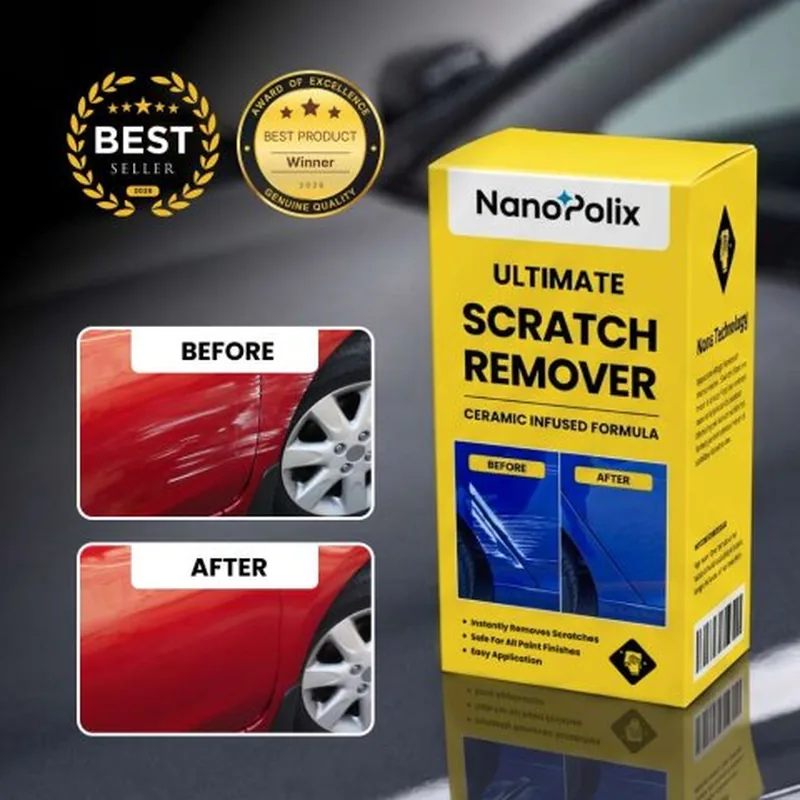
NanoPolix Review: Does This Nano-Cloth Really Erase Car Scratches?
 By Marcus Webb · Updated September 1, 2026
Key Takeaways
Minor paint damage is one of those problems that's cheap to ignore and expensive to fix properly — a body shop quote for a single key mark or scuff routinely runs into the hundreds of dollars, which is exactly why a wipe-on "nano cloth" that promises to erase it for a fraction of that cost has found an audience. NanoPolix is a reusable microfiber cloth infused with nano-metal polishing particles, pitched as a 60-second fix for scratches, oxidation, and stains. The underlying idea — a mild, particle-infused polish built into a cloth — is a real and established category in DIY car detailing; the sales page's claim that it erases any scratch, including deep gouges, is where things get overstated.
- A real, workable category. Nano-particle detailing cloths are an established DIY product type that genuinely buffs out surface-level clear-coat defects — this isn't an invented technology.
- The "100% removes all scratches" claim overreaches. Several sales-page testimonials describe it erasing deep key gouges and full-panel keying, which isn't physically plausible for a cloth alone.
- Best suited to light, cosmetic damage. Swirl marks, water spots, faint scuffs, and oxidation haze are where this category of product has a genuine job to do.
- Backed by a 30-day guarantee. Enough time to test it against a few real trouble spots on your own car before deciding whether to keep it.
Every car accumulates cosmetic damage over time — a shopping-cart scuff, a branch scrape in the driveway, the faint haze that builds up on a car parked outside year-round — and taking it to a body shop for any single mark rarely makes financial sense. That gap between "too small for a repair shop" and "annoying enough to bother you every time you look at it" is exactly where wipe-on detailing products live, and NanoPolix is one of the more heavily marketed entries in that space right now. It's sold as a single reusable cloth, positioned as a faster and cheaper alternative to liquid scratch-repair compounds and DIY buffing kits, with the pitch built around how little effort it takes: rub, wipe, done.
What Is NanoPolix, Mechanically?
The product is a microfiber cloth manufactured with nano-metal polishing particles worked into the fabric itself, rather than a separate liquid or paste you apply by hand. The seller describes the mechanism as the particles "filling" microscopic gaps in the clear coat as you rub the cloth over a mark in small circular motions, smoothing out light refraction irregularities that make a scratch visible to the eye. That's a fair description of how mild abrasive/filler polishes work in general — car paint is a clear-coat layer over color, and most of what the eye reads as a "scratch" on light damage is actually a disruption in that clear coat's surface, not a cut all the way through it. A cloth-based nano-polish can smooth that surface layer; it has no way to add material back into a scratch that has gone through the clear coat into the base color or primer beneath it.
Who NanoPolix Is For
The realistic buyer is someone who wants an easy, ongoing way to deal with the small cosmetic damage that accumulates on any daily-driven car — swirl marks from automatic car washes, faint key marks that haven't broken the clear coat, water spots, bird-dropping etching, and general oxidation dulling the finish. It's a poor fit for anyone expecting it to substitute for a body shop on a deep gouge, a full-panel key job, or damage that's visibly down to bare metal or primer — that kind of repair needs actual paint correction, touch-up paint, or a respray, not a polishing cloth, regardless of what a single dramatic testimonial on the sales page implies.
NanoPolix
Reusable nano-particle microfiber cloth for buffing out light scratches, swirl marks, water spots, and oxidation haze.
✓ 30-day money-back guarantee, stated on the offer page.
Visit Official Page → This offer is temporarily unavailable — showing our current alternative pick.Living With It
The seller's own instructions boil down to three steps: wipe the surface dry to clear dust and debris, rub the cloth over the damaged area in small circular motions, then buff away any remaining residue. There's no water, no separate polish or compound to buy, and no drying or curing time — the entire process is meant to happen in the time it takes to notice the mark and deal with it. Because it's reusable rather than a one-use wipe, the ongoing cost is just storing the cloth somewhere accessible, like a glovebox or garage shelf, for the next scuff. The sales page doesn't specify how many treatments the cloth holds up for before the nano-particle layer wears thin, so treat "reusable" as good for a meaningful number of uses rather than an unlimited lifetime.
What Works in Its Favor
- Built on a real detailing category. Nano-particle polishing cloths are an established, genuinely functional product type for surface-level paint correction — this isn't a fabricated technology.
- Genuinely fast and low-effort. No water, no separate compound, no dry time — just wipe and buff, which matters for a product meant to be used the moment you notice a new mark.
- Reusable rather than single-use. One cloth is meant to handle multiple marks over time instead of being thrown away after one application.
- Reasonable claimed scope beyond scratches. Water spots, bird-dropping etching, and oxidation haze are all plausible targets for a mild polishing formula, not just scratches.
- A real 30-day guarantee. Enough time to test it against your own car's actual trouble spots before committing.
Honest Limitations
- The "100% removes all scratches" claim overreaches. Several testimonials describe it erasing deep key gouges and full-panel keying, which isn't physically realistic for a wipe-on cloth alone.
- An uncited paint-damage statistic. The claim that "the average car accumulates over $1,500 in minor paint damage every three years" appears with no source.
- An unverifiable founder endorsement. A quote attributed to "Dave Collins, Founder" carries no company details or independent way to confirm it.
- No stated lifespan for the cloth. "Reusable" isn't paired with a number of uses or a sign for when the nano-particle layer is worn out.
Key Specs
- Format
- Reusable microfiber cloth, nano-metal particle infusion
- Application
- Dry use, no water or separate compound required
- Method
- Rub in small circular motions, buff residue clean
- Best suited for
- Swirl marks, light key scratches, water spots, oxidation, bird-dropping etching
- Not suited for
- Deep scratches or gouges through the clear coat and base color
- Guarantee
- 30-day money-back guarantee
Performance
As a physical product, there's nothing implausible about a nano-particle-infused cloth smoothing out light clear-coat imperfections — mild filler/polish formulas built into applicator cloths are a known, functioning category in the detailing world, and the mechanism the seller describes (particles filling microscopic surface gaps as you rub) matches how that category actually works. Where realistic expectations matter most is depth of damage: a scratch you can catch a fingernail on has almost certainly gone through the clear coat, and no wipe-on cloth — nano-particle or otherwise — restores material that's been physically removed down to color or primer. For the shallower damage this category is built for — swirl marks, faint scuffs, oxidation film, water spots — a circular buffing motion with an abrasive-infused cloth is a believable way to get a visible improvement, even if "100%" removal is an optimistic way to describe it.
What the Sales Page Gets Right — and What It Doesn't
The core mechanism checks out: nano-particle or mild-abrasive detailing cloths are a real, established way to address light clear-coat defects, and the seller's three-step application process (clean, rub, buff) matches how that kind of product is actually used. The claimed scope beyond scratches — water spots, oxidation, bird-dropping stains — is also reasonable, since a mild polishing formula genuinely can address those cosmetic issues.
Where the page oversells is depth. Framing the product as removing "100% of all scratches" and running testimonials describing a "deep key scratch" or a full driver-side keying job vanishing in one sitting sets an expectation the physics don't support — that kind of damage requires actual paint repair, not a polish. The uncited "$1,500 in paint damage every three years" statistic and the unverifiable "Founder" quote are worth knowing about too, even though neither changes what the hardware itself can realistically do.
Verdict
NanoPolix earns real credit as a low-effort way to handle the cosmetic paint damage that accumulates on any daily driver — its underlying category is genuine, and for swirl marks, light scuffs, water spots, and oxidation haze, a rub-and-buff nano-particle cloth is a believable, useful tool to keep in the glovebox. What it isn't is a substitute for real paint correction on anything that's gone past the clear coat, whatever a single dramatic testimonial might suggest.
If your car's damage is the everyday cosmetic kind — the kind you'd otherwise just live with rather than pay a body shop for — it's a reasonable, low-risk product to try, backed by a 30-day window to judge it against your own car. If you're dealing with a scratch you can feel with a fingernail, treat that as a job for actual paint repair instead.
Frequently Asked Questions
Will NanoPolix remove a deep key scratch or gouge?
Realistically, no. A wipe-on cloth can buff out damage that sits in or on the clear coat — swirl marks, fine scuffs, oxidation film — but a scratch that's cut through the clear coat into the base color or primer needs actual paint correction or touch-up paint, not a polishing cloth. Treat deep gouges as outside its scope, regardless of what any single testimonial suggests.
What kind of damage is NanoPolix actually good for?
Light, surface-level issues: fine key marks that haven't broken through the clear coat, swirl patterns from automatic car washes, water spots, bird-dropping etching, and general oxidation haze. These are the categories where a nano-particle detailing cloth has a real, physically plausible job to do.
Is it safe on dark paint colors and metallics?
The seller markets it as safe across paint colors and finishes, and a non-abrasive nano-cloth formula is generally gentler than compound-and-buffer paint correction. As with any polish, it's worth testing on a small, inconspicuous panel first before working over a visible area.
Is the cloth reusable, or is it single-use?
It's sold as reusable — store it after use and it's ready for the next mark. How many treatments it holds up for before the nano-particle layer wears down isn't specified on the sales page.
What if it doesn't work on my car?
NanoPolix is backed by a 30-day money-back guarantee, which is enough time to test it against a few real trouble spots on your own vehicle before deciding whether to keep it.
Read the full NanoPolix Overview for specs, how it works, and where to buy — or browse more picks in Auto & Travel Gadgets.
Marcus covers outdoor, fitness, and travel gear at GearGlobes. His reviews separate what a product actually does from how it's marketed, flagging claims that can't be independently verified rather than repeating them as fact.